Transparent automated content moderation
TACo
Project
The WWTF (Vienna Science and Technology Fund) funded TACo Project consists of an interdisciplinary team of data science (Technische Universität Wien) and political communication (Universität Wien) researchers focusing on user-centric approaches towards automated content moderation by studying user agency in online content regulation, developing toxicity detection systems and automated content moderation models, as well as testing its attitudinal, behavioral and emotional effects on citizens and human content moderators.


.
ABOUT
Online political discussions are increasingly perceived as negative, aggressive, and toxic. This is a worry, because exposure to toxic content undermines trust and fosters cynicism, leading to a polarized society. Defining what and how “toxic” content should be regulated online is therefore one of the most pressing challenges for researchers today, because such an approach can be used to develop (semi-) automated content moderation systems that ensure healthy political conversations on a global scale. However, the available research on toxic content and its moderation is elite-driven and imposes top-down definitions of what is “good” or “bad” on users. This has resulted in biased content moderation models, and it has damaged the reputation of those who have implemented them. More importantly, however, a top-down approach removes agency from citizens in a time when many already feel they have too little influence on their daily information intake. Therefore, the TACo Project proposes a novel user-centric approach towards automated content moderation. We (a) conduct exploratory social science research to learn what citizens themselves want, when it comes to content moderation. Then, we (b) develop toxicity detection systems and automated moderation models based on this knowledge, testing for usefulness and reliability. Finally, we test whether what citizens “want” truly has beneficial effects for them: we (c) conduct experiments that test the effects of these models on citizens’ political trust, knowledge, engagement, and well-being.
The WWTF (Vienna Science and Technology Fund) funded TACo Project is an interdisciplinary project of data science (Technische Universität Wien) and political communication (Universität Wien) researchers led by Univ.-Prof. Dr. Sophie Lecheler (PI, Universität Wien) and Univ.Prof. Dr. Allan Hanbury (Co-PI, TU Wien).
TEAM

Univ.-Prof. Dr.
Sophie Lecheler
Principal Investigator, University of Vienna
Sophie Lecheler is Professor of Communication Science with a focus on Political Communication at the Department of Communication at the University of Vienna. Her research areas & interests include Political Communication, Digital Journalism, Emotions, Framing, News Processing, and Experimental Research.

Univ.Prof. Dr.
Allan Hanbury
CO-Principal Investigator, TU Vienna
Allan Hanbury is a Professor of Data Intelligence at the Department of Data Science at TU Vienna. His research areas & interests include Information Retrieval, Data Mining, Information Extraction, Data Analysis, Information Systems Engineering, Visual Computing and Human-Centered Technology.

Ass.-Prof. Dr.
Svenja Schäfer, MA
Ass.-Prof., Wageningen University & Research
Svenja Schäfer is an Assistant Professor at the Strategic Communication group at Wageningen University & Research. Her research interests focus on the question of the relation between news consumption and the formation of (perceived) knowledge, attitudes and behaviors. In her studies, she looked at effects of news on social media for an illusion of knowledge, relation between user comments and polarized attitudes and motives and potential solutions for news avoidance.

Assistant Prof. Mag.a rer.nat. Dr.in techn. Julia Neidhardt
Ass.-Prof., TU Vienna
Julia Neidhardt is a postdoctoral researcher at the Research Unit E-Commerce TU Vienna Informatics at the Department of Data Science. Her research areas & interest include information systems engineering, user modeling and recommender systems, developing approaches to capture online opinion-forming and online behavior, and digital humanism. Julia Neidhardt is part of the Digital Humanism Initiative at TU Wien and board member of Center for Artificial Intelligence and Machine Learning (CAIML). She is the leader of the 2022 established Christian Doppler Lab for Recommender Systems an der TU Wien. Since 2023 she is UNESCO Co-Chair on Digital Humanism.
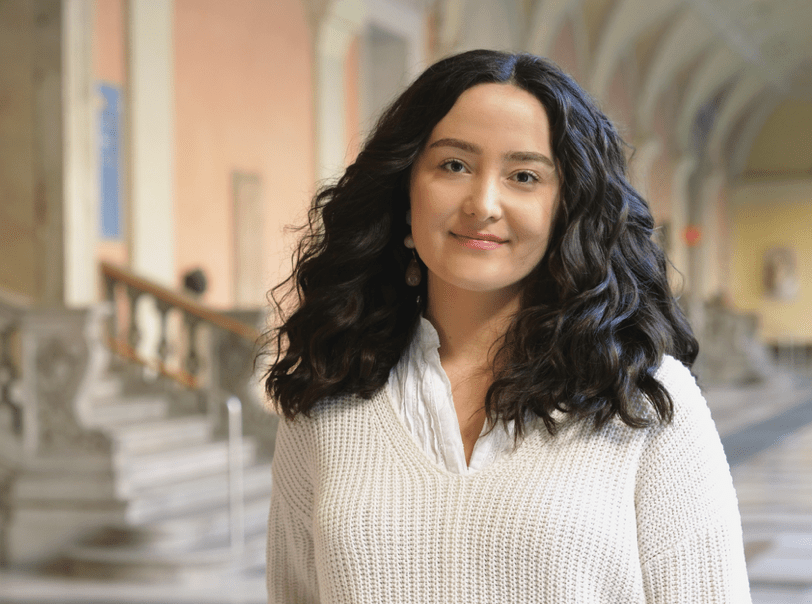
Anna Maria Planitzer, Ba MA
Predoctoral Researcher, University of Vienna
Anna Maria Planitzer is a Ph.D. candidate and Predoctoral Researcher at the Political Communication Research Group at the University of Vienna. Her research areas & interest include human-centered AI in Political Communication, Automated Content Moderation, User Agency, and User Effects.

Projektass.in Dipl.-Ing. / BsC Pia Pachinger
Predoctoral Researcher,
TU Vienna
Pia Pachinger is a Ph.D. student and project assistant at the Data Science group of TU Vienna. Her research areas & interests cover multiple topics in the field of natural language processing.
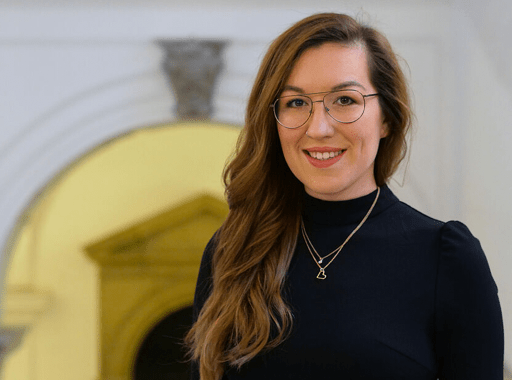
Andrea Stockinger, BA MA
Predoctoral Researcher, University of Vienna
Andrea Stockinger is a Ph.D. candidate at the Political Communication Research Group. Her research areas & interests include online political talk, experimental research methods, and computational communication science.
RESEARCH & NEWS
Latest Peer-Reviewed Publications of TACo
Schäfer, S. & Planitzer, A. M.(2025). User comments. In Nai, A., Grömping, M., & Wirz, D. (Eds). Elgar Encyclopedia of Political Communication. Edward Elgar Publishing. Accepted version. DOI Link
Pachinger, P., Goldzycher, J., Planitzer, A. M., Kusa, W., Hanbury, A., Neidhardt, J. (2024). AustroTox: A Dataset for Target-Based Austrian German Offensive Language Detection. In Findings of the Association for Computational Linguistics: ACL 2024. DOI Link
Schäfer, S., Rebasso, I., Boyer, M. M., & Planitzer, A. M. (2023). Can We Counteract Hate? Effects of Online Hate Speech and Counter Speech on the Perception of Social Groups. Communication Research, 51(5), 553-579. DOI Link
Pachinger, P., Hanbury, A., Neidhardt, J., & Planitzer, A. M. (2023). Toward Disambiguating the Definitions of Abusive, Offensive, Toxic, and Uncivil Comments. In Proceedings of the 1st Workshop on Cross-Cultural Considerations in NLP (C3NLP). EACL 2023 (pp. 107-113). DOI Link
Stockinger, A., Schäfer, S., & Lecheler, S. (2023). Navigating the gray areas of content moderation: Professional moderators’ perspectives on uncivil user comments and the role of (AI-based) technological tools. New Media & Society. DOI Link
Latest Conference Activities of TACo
The TACo Project regularly presents its findings at leading conferences in Communication Science, Data Science, and their intersections – such as:
ICA (2022, 2023, 2025), ECREA (2024), ACL (2023, 2024), NAACL (2024), AoIR (2023),
ECREA PolComm Section Interim Conference (2023), WAPOR (2023), EACL (2023), COMPTEXT (2025), and AlgoSoc (2025).
Latest Talks, Public & Policy Engagement of TACo (SELECTED)
Planitzer, A. M. (2025): Guest Lecture in Political Communication Lecture at University of Vienna – Platform Governance, Artificial Intelligence, and Power.
Planitzer, A. M. (2025): Hatred and Discrimination Online: What Is AI Really Capable Of?. Public Event: „Junge Wissenschaft“ within the Science Program of the Vienna Adult Education Center (VHS) Wien.
Planitzer, A. M. (2024): Project Presentation – Web@ngels. Counter-speech Project of Comment Sections of Austrian Newspapers. Hosted by ZARA – Civil Courage & Anti-Racism-Work, Vienna, Austria.
Planitzer, A. M. (2024): Invited Scientific Stakeholder at a two-day policy and research event on discrimination and combating hate speech online. Hosted by the EU and Council of Europe, Strasbourg, France.
Planitzer, A. M. (2024): Artificial Intelligence: Benefits and Risks in the Fight Against Online Harm. Public Event: AI – Opportunities and Risks. Hosted by the Adult Education Center Vienna (VHS).
Neidhart, J. (2024): Lecture Series: Digital Humanism – Rethinking Recommender Systems and AI for a Better Digital Future.
Lecheler, S. (2024): Lecture Series: Digital Humanism – Transparent Automated Content Moderation: Towards a User-Centric Approach.
Planitzer, A. M. (2023): Social Media Governance: Mitigating the Detrimental Effects of Hate Speech and Incivility. Hosted by the International Research Center for Social and Ethical Issues, Salzburg, Austria.
Pachinger, P. (2024): Natural Language Processing and Information Extraction – Faculty of Informatics, TU Vienna.
Pachinger, P. (2023): Advanced Information Retrieval – Faculty of Informatics, TU Vienna.
Pachinger, P. (2023): Language Technology and Language Data – Faculty of Linguistics, Paris Lodron University Salzburg.
Pachinger, P. (2023):University of Chile, Open Beauchef – Toxic Comment Detection in Social Media.
 TACo Project